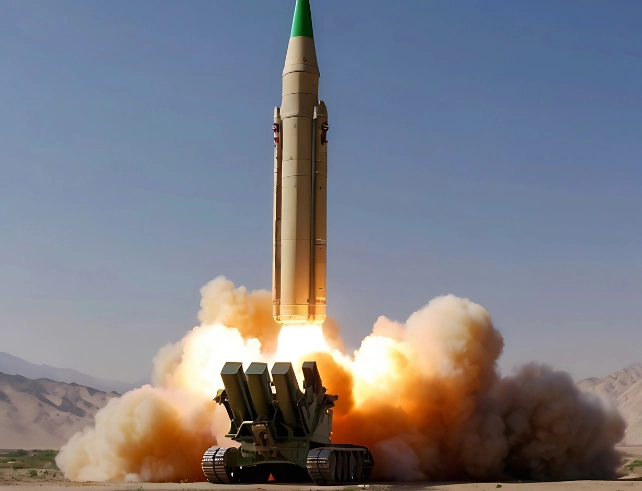
The Defence Research and Development Organisation (DRDO) and the Indian Air Force (IAF) have successfully conducted flight tests of the Astra Beyond Visual Range Air-to-Air Missile (BVRAAM) equipped with an indigenous Radio Frequency (RF) seeker, marking a significant development in India’s defence technology capabilities.
India achieved another milestone in indigenous defence development after DRDO and the Indian Air Force successfully carried out flight tests of the Astra Beyond Visual Range Air-to-Air Missile from a Su-30 Mk-I fighter aircraft off the coast of Odisha on July 11, 2025.
According to the Ministry of Defence, two missile launches were conducted against high-speed unmanned aerial targets under varying operational conditions, including different ranges, target aspects and launch parameters. Both missiles successfully engaged and destroyed their targets with high accuracy.
The tests validated the performance of the indigenous Radio Frequency seeker developed by DRDO, a critical component responsible for target tracking and engagement during the terminal phase of the missile’s flight. Officials said all subsystems functioned as expected throughout the trials.
Flight data collected through range tracking instruments deployed by the Integrated Test Range (ITR) at Chandipur confirmed the missile’s performance. The successful trials reaffirmed the reliability and precision of the Astra weapon system equipped with the domestically developed seeker technology.
Astra is India’s indigenous Beyond Visual Range Air-to-Air Missile and is designed to engage aerial targets at distances exceeding 100 kilometres. The missile incorporates advanced guidance and navigation systems and has been developed through the combined efforts of several DRDO laboratories along with support from more than 50 public and private sector companies. Hindustan Aeronautics Limited (HAL) is among the key contributors to the programme.
Defence Minister Rajnath Singh congratulated DRDO, the Indian Air Force and industry partners involved in the development of the RF seeker, describing the successful test as an important achievement in strengthening critical defence technologies.
Dr Samir V Kamat, Secretary of the Department of Defence Research and Development and Chairman of DRDO, also commended the teams involved in the successful flight trials.
The achievement is expected to further strengthen India’s self-reliance efforts in advanced missile technologies and indigenous defence manufacturing.
Source: This article is based on a Press Information Bureau (PIB) release issued by the Ministry of Defence
Press Release Page | Press Information Bureau