


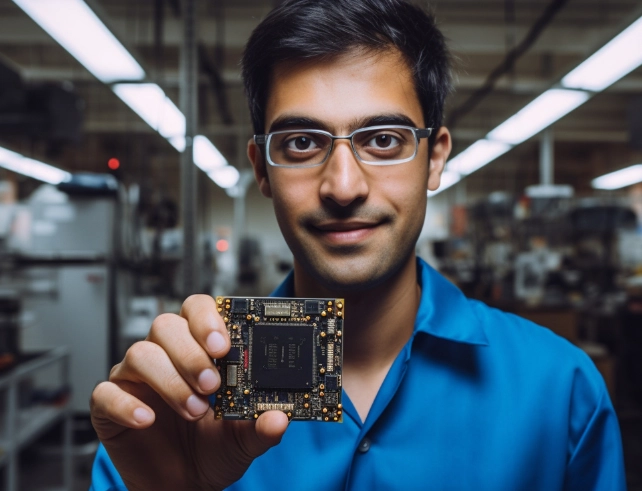
With a ₹1,000 crore investment for India Semiconductor Mission (ISM) 2.0 in the Union Budget 2026–2027, India has escalated its semiconductor aspirations and signaled a strategic shift away from reliance on imported chips and toward indigenous innovation and manufacturing. Developing semiconductor materials and equipment, creating domestic intellectual property, fortifying supply networks, and increasing industry-led research and worker training are the main objectives of the updated program.
By 2029, India hopes to design and produce semiconductors that satisfy between 70 and 75 percent of domestic demand under ISM 2.0. With a roadmap aiming for 3-nanometer and 2-nanometer technology nodes to service industries like automotive, telecom, aerospace, industrial electronics, and power systems, the program’s next phase will prioritize advanced manufacturing. Homegrown technology are already being used in a number of approved projects for chip assembly, testing, and packaging.
Modern digital and industrial infrastructure depends on semiconductors, and by 2035, India wants to become a major semiconductor-producing country. India has gradually increased its design, fabrication, and testing skills, building on ISM 1.0, which was introduced in 2021 with an incentive framework worth ₹76,000 crore.
Ten semiconductor projects totaling ₹1.60 lakh crore have been sanctioned in six states as of December 2025, demonstrating India’s expanding contribution to the global chip ecosystem in the face of fiercer competition from around the world.
Source – Times Now
