


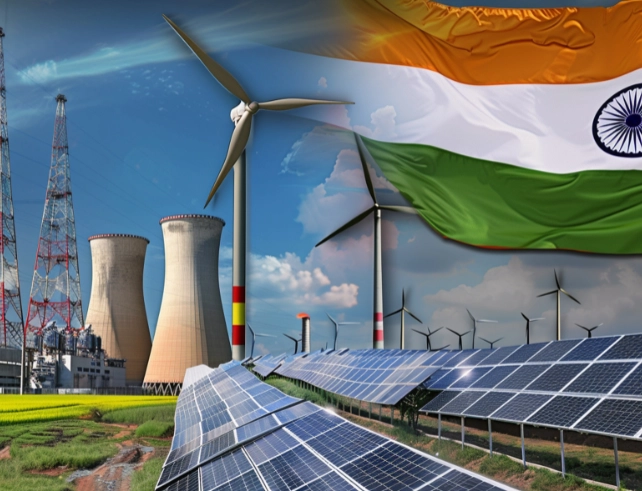
According to Union Minister Pralhad Joshi, India has surpassed Brazil to become the third-largest nation in the world in terms of installed capacity for renewable energy.
In 2025–2026, India installed a record 55.3 GW of non-fossil fuel capacity, bringing its total renewable capacity to 283.5 GW—the largest yearly growth to date. Under programs like PM KUSUM, rooftop solar and solar pumps made a substantial contribution to distributed renewable energy.
Additionally, the nation reached a significant milestone in July 2025 when 51.5% of its electricity needs were satisfied by renewable energy sources, including as solar, wind, hydro, and nuclear.
According to officials, the expansion has lessened reliance on fossil fuels in the face of global supply interruptions, especially as a result of the West Asia issue. The shift has been further aided by further railroad electrification, growing EV usage, and the growth of solar-plus-storage options.
There are still issues, though, such as the sporadic reduction of renewable output because of grid constraints. To solve these problems, the government is speeding up improvements to the transmission system.
Source – The times of India
