


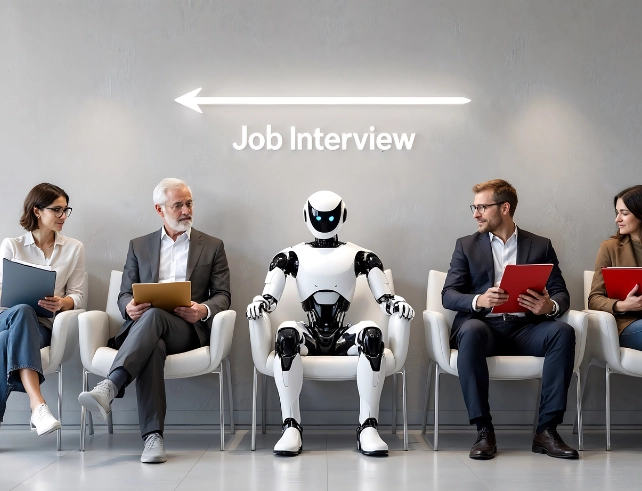
Anthropic has just come out with a rigorous labour market study in Artificial Intelligence (AI), which introduces a new measure for understanding the labour market effects of AI and studies impacts on unemployment and hiring. Jobs are more exposed to AI to the extent that their tasks are theoretically feasible with LLMs, with computer programmers, customer service representatives, and financial analysts cited as among “the most exposed”.
Even though the current usage of AI is limited in some sectors, Anthropic found that AI can theoretically cover a majority of tasks in sectors like business and finance, management, computer science, math, engineering, legal, and office administration roles.
In contrast, the company said that sectors like construction, agriculture, protective services, and personal care, among others, may have a limited theoretical use of AI, and therefore, jobs in these sectors could be more insulated from the impact of AI than some others.
This finding shows one key thing: that even though AI is theoretically capable of doing almost all tasks in some sectors, its current usage is limited. For instance, for computer and math workers, large language models are theoretically capable of handling 94% of their tasks. But Claude currently only covers 33% of those tasks in observed professional use.
Which jobs are at most risk from AI?
The researchers combined three data sources to build a picture of which jobs are most at risk:
First, they used the US government’s occupational database to map out every task associated with around 800 jobs. Second, they juxtaposed it with existing academic measures of which tasks AI could theoretically speed up significantly. Third, and most importantly, they cross-referenced this against real Claude usage data to see which tasks people are actually using AI for in professional settings today, weighting fully automated use more heavily than assisted use.
The result is a measure they call “observed exposure”: not just what AI could theoretically do, but what it is demonstrably already doing at work.
They then tested this measure against US government employment projections and unemployment survey data to see whether higher exposure correlates with weaker job growth and rising unemployment.
Already, hiring of younger workers into the so-called exposed roles has dropped sharply since ChatGPT launched. Entry into high-exposure occupations among workers aged 22 to 25 has fallen 14% since late 2022. Even as companies are not laying people off, they are closing the front door for new hires.
Graduate programmes, entry-level analyst cohorts, junior developer pipelines: these are the roles being pushed off the hiring charts while companies figure out how much of that work AI can absorb. By the time this shows up as a workforce crisis, the entry level market would have been dented for over 24 months, or more.
The data also shows how some demographics can be more at risk than others. Workers in the most AI-exposed professions differ significantly from those in unexposed roles. The data indicates that highly exposed workers are more likely to be:
Female: 54.4% of the most exposed group is female, compared to 38.8% of the unexposed group.
Highly educated: Those with a Bachelor’s degree or higher are disproportionately represented. For instance, workers with graduate degrees are nearly four times more likely to be in the most exposed quartile than the unexposed group.
White or Asian: White workers make up 65.1% of the high-exposure group (vs. 54.5% of the unexposed), and Asian workers are nearly twice as likely to be in the most exposed group. Hispanic and Black workers are less represented in high-exposure roles.
Older: The average age of highly exposed workers is slightly higher (42.9) than those in unexposed roles.
Though Anthropic’s analysis extensively analyses data from the United States, AI is already making a huge wave in the Indian market, posing a big risk to some of the country’s most crucial industries. Broadly, lack of mathematical and scientific skills in a large part of the country’s population further add to the problem, which is compounded by low spends on education, research and development compared with rivals like the US and China.
Last month, India’s IT services sector came under a huge selloff pressure over risks that AI could make many of their business operations obsolete. Over the past year, the Nifty IT index and stocks of Tata Consultancy Services (TCS), Wipro and Infosys have crashed about or over 20%, with all other major IT services companies facing a sharp sell-off.
Analysts at Motilal Oswal have previously said that over the next four years, between 9-12% of IT services companies’ revenues could be erased, underscoring a nearly 2% hit on revenue growth each year.
Much of that was triggered last month when Anthropic launched a suite of workplace automation tools that can perform tasks previously handled by human workers or traditional software platforms. The announcement sent shockwaves through global technology markets, crystallising a fear that has been building for months: that AI might not just assist software companies, but potentially replace them altogether.
For Indian IT companies, the implications are particularly acute. Their business model has long depended on providing services—data processing, contract analysis, compliance monitoring, customer support—that AI tools can now potentially automate. Anthropic’s announcement includes specialised tools for legal workflows such as contract review, NDA analysis, and compliance monitoring, as well as applications in finance, sales, and data analytics.
While it may not be a complete doomsday for the sector, at least not yet, the recent price corrections have led to calls for the sector to evolve quickly to adapt to the AI world.
