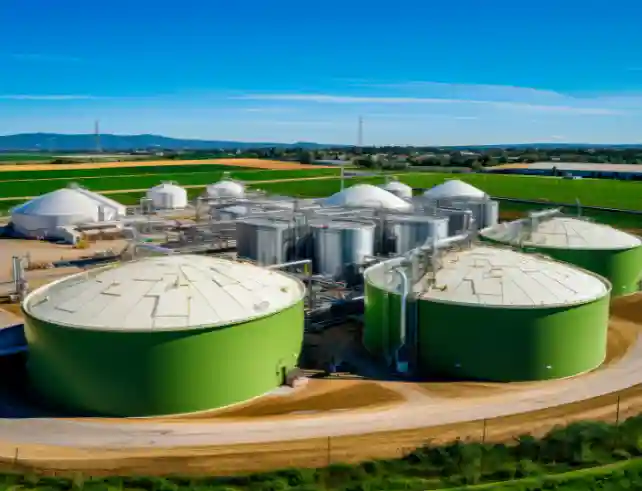
New Delhi, India: The Union Cabinet has approved the GOBARdhan scheme with a total outlay of ₹23,731 crore to accelerate compressed biogas (CBG) production, strengthen India’s clean energy ecosystem, and promote circular bioeconomy initiatives through assured offtake, pricing support, capital assistance and financing mechanisms.
The Union Cabinet, chaired by Prime Minister Narendra Modi, has approved the National Circular Bioenergy Scheme (GOBARdhan) with a financial outlay of ₹23,731 crore. The initiative, to be implemented from FY 2026-27 to FY 2035-36, aims to significantly expand India’s compressed biogas (CBG) sector while converting agricultural residue, cattle dung, municipal organic waste and other biomass into clean energy and organic manure.
According to the Ministry of Petroleum and Natural Gas, the scheme seeks to increase domestic CBG production nearly ten-fold by creating a unified national framework that offers assured demand, stable pricing, capital support, improved pipeline connectivity and easier access to finance.
The government said GOBARdhan builds on earlier initiatives, including the SATAT programme, the Market Development Assistance (MDA) Scheme, the Biomass Aggregation Machinery (BAM) Scheme, the Development of Pipeline Infrastructure (DPI) Scheme, and Common Infrastructure Facilities Assistance (CFA) for CBG plants. These measures have already supported the commissioning of more than 200 CBG plants across the country.
The scheme includes six major components. These cover an assured CBG offtake framework through City Gas Distribution entities, a stable administered pricing mechanism of ₹8.2-11.0 per MMBTU, capital assistance of up to ₹2 crore per tonne per day (TPD) of installed CBG capacity for eligible projects, development of dedicated pipeline infrastructure, a credit guarantee mechanism to improve institutional financing, and a CBG Ecosystem Challenge Fund to support district-level implementation.
The ministry said the programme is expected to reduce dependence on imported fossil fuels, encourage private investment, improve waste management and create new income opportunities for farmers, cooperatives, MSMEs and rural entrepreneurs. It also aims to strengthen the production of organic manure while lowering greenhouse gas emissions through better utilisation of agricultural and organic waste.
Officials said the scheme is intended to provide a long-term policy framework for scaling up India’s bioenergy sector while supporting energy security, rural development and the country’s broader circular economy objectives.
Source: This article is based on an official press release issued by the Press information Bureau, Ministry of Petroleum & Natural Gas, Government of India
Press Release Page | Press Information Bureau