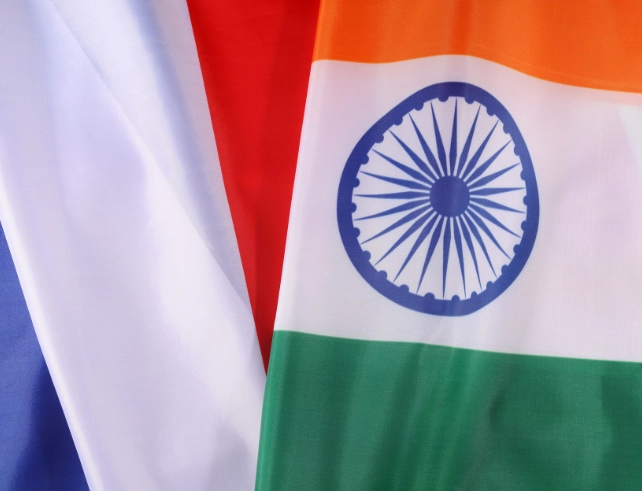
India, France Unveil Innovation Roadmap 2030

India, France Unveil Innovation Roadmap 2030

India and France have adopted the India-France Innovation Roadmap 2030, outlining a framework for cooperation in artificial intelligence, research, advanced technologies, academic mobility and industrial innovation as both countries seek to strengthen their strategic partnership.

India and France have launched an ambitious innovation agenda extending to 2030, aimed at expanding collaboration in critical and emerging technologies while fostering deeper links between governments, industry, academia and research institutions.

The roadmap follows the elevation of bilateral ties to a Special Global Strategic Partnership by Prime Minister Narendra Modi and French President Emmanuel Macron in February 2026. It builds on the India-France Year of Innovation 2026 and aligns with India’s Viksit Bharat 2047 vision and France’s France 2030 strategy.

A central pillar of the roadmap is cooperation on trusted artificial intelligence. Both countries agreed to work on the development of safe, secure and trustworthy AI systems, strengthen cooperation between regulators and standards bodies, and advance risk-based governance frameworks for frontier and generative AI technologies. The partnership will also address issues such as misinformation, human rights protections and interoperability standards.

The two nations identified child online safety as a priority area, committing to collaborate on privacy-preserving age assurance technologies and safety standards for AI systems that interact with children. They also emphasized the importance of privacy-focused data-sharing frameworks to support innovation while safeguarding individual rights.

Academic and people-to-people exchanges form another major component of the initiative. India and France reaffirmed support for expanded recognition of educational and professional qualifications, building on their existing Mutual Recognition of Qualifications agreement. The roadmap also encourages student mobility, dual-degree programmes, research collaborations and institutional partnerships. France reiterated its objective of welcoming 30,000 Indian students by 2030.

The roadmap further seeks to strengthen industry-academia collaboration through organizations such as the Indo-French Centre for the Promotion of Advanced Research (CEFIPRA). Both countries plan to support joint research, innovation-led growth and the development of resilient supply chains in strategic sectors.

Several agreements between universities, research institutions and innovation bodies were also announced, covering fields including artificial intelligence, technology transfer, academic exchange and scientific research.

The initiative reflects a broader effort by India and France to translate their strategic partnership into tangible cooperation across innovation-driven sectors while addressing global technological and economic challenges.

Source: This article is based on a Press Information Bureau (PIB) release issued by the Prime Minister’s Office
Press Release: Press Information Bureau

Leave a comment

India and France have adopted the India-France Innovation Roadmap 2030, outlining a framework for cooperation in artificial intelligence, research, advanced technologies, academic mobility and industrial innovation as both countries seek to strengthen their strategic partnership.

India and France have launched an ambitious innovation agenda extending to 2030, aimed at expanding collaboration in critical and emerging technologies while fostering deeper links between governments, industry, academia and research institutions.

The roadmap follows the elevation of bilateral ties to a Special Global Strategic Partnership by Prime Minister Narendra Modi and French President Emmanuel Macron in February 2026. It builds on the India-France Year of Innovation 2026 and aligns with India’s Viksit Bharat 2047 vision and France’s France 2030 strategy.

A central pillar of the roadmap is cooperation on trusted artificial intelligence. Both countries agreed to work on the development of safe, secure and trustworthy AI systems, strengthen cooperation between regulators and standards bodies, and advance risk-based governance frameworks for frontier and generative AI technologies. The partnership will also address issues such as misinformation, human rights protections and interoperability standards.

The two nations identified child online safety as a priority area, committing to collaborate on privacy-preserving age assurance technologies and safety standards for AI systems that interact with children. They also emphasized the importance of privacy-focused data-sharing frameworks to support innovation while safeguarding individual rights.

Academic and people-to-people exchanges form another major component of the initiative. India and France reaffirmed support for expanded recognition of educational and professional qualifications, building on their existing Mutual Recognition of Qualifications agreement. The roadmap also encourages student mobility, dual-degree programmes, research collaborations and institutional partnerships. France reiterated its objective of welcoming 30,000 Indian students by 2030.

The roadmap further seeks to strengthen industry-academia collaboration through organizations such as the Indo-French Centre for the Promotion of Advanced Research (CEFIPRA). Both countries plan to support joint research, innovation-led growth and the development of resilient supply chains in strategic sectors.

Several agreements between universities, research institutions and innovation bodies were also announced, covering fields including artificial intelligence, technology transfer, academic exchange and scientific research.

The initiative reflects a broader effort by India and France to translate their strategic partnership into tangible cooperation across innovation-driven sectors while addressing global technological and economic challenges.

Source: This article is based on a Press Information Bureau (PIB) release issued by the Prime Minister’s Office
Press Release: Press Information Bureau