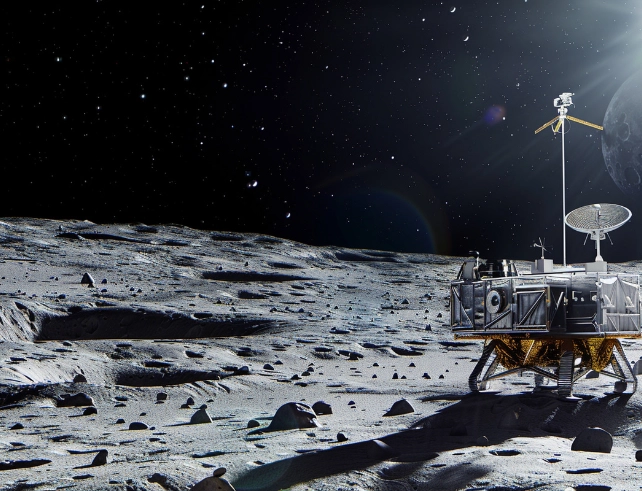
Chandrayaan-3 Hop Test May Shape Future Lunar Missions 

According to the Indian Space Research Organization, the hop experiment carried out during Chandrayaan-3 may yield important information for upcoming lunar exploration and the construction of moon bases. 

Near the end of its mission, the Vikram lander conducted a controlled “hop experiment” after making a successful touchdown close to the Moon’s south pole in August 2023. The lander used the remaining fuel on board to touch down again at a nearby area after briefly rising 40 to 50 centimeters above the lunar surface. 

Through the experiment, scientists were able to use the ChaSTE instrument to examine a second piece of lunar soil near Shiv Shakti Point. With a soft upper layer and denser material just below the surface, researchers discovered that the Moon’s surface near the south pole is more complicated than previously thought. 

Additionally, Vikram’s engine exhaust moved around three centimeters of topsoil, revealing fresher lunar material beneath, according to ISRO scientists. For next missions, the results may assist international space agencies better understand drilling operations, rover mobility, landing stability, and astronaut safety. 

As organizations like NASA get ready for long-term lunar exploration under the Artemis mission, which focuses on the Moon’s south pole region, the data is very important. 

Source – Digit

Leave a comment

According to the Indian Space Research Organization, the hop experiment carried out during Chandrayaan-3 may yield important information for upcoming lunar exploration and the construction of moon bases. 

Near the end of its mission, the Vikram lander conducted a controlled “hop experiment” after making a successful touchdown close to the Moon’s south pole in August 2023. The lander used the remaining fuel on board to touch down again at a nearby area after briefly rising 40 to 50 centimeters above the lunar surface. 

Through the experiment, scientists were able to use the ChaSTE instrument to examine a second piece of lunar soil near Shiv Shakti Point. With a soft upper layer and denser material just below the surface, researchers discovered that the Moon’s surface near the south pole is more complicated than previously thought. 

Additionally, Vikram’s engine exhaust moved around three centimeters of topsoil, revealing fresher lunar material beneath, according to ISRO scientists. For next missions, the results may assist international space agencies better understand drilling operations, rover mobility, landing stability, and astronaut safety. 

As organizations like NASA get ready for long-term lunar exploration under the Artemis mission, which focuses on the Moon’s south pole region, the data is very important. 

Source – Digit